
Affiliated with a Castle Connolly Top Hospital
Who is Dr. Henderson, Neurosurgeon in Stanford, CA?
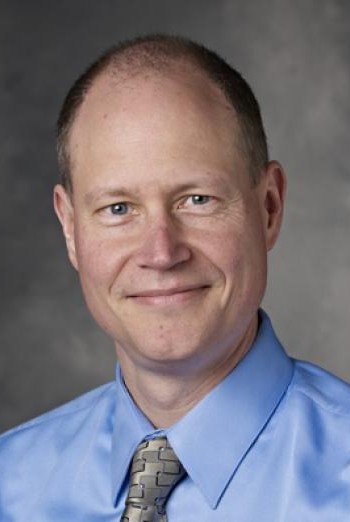
Dr. Jaimie Henderson, MD is a Neurosurgeon, who primarily practices in Stanford, CA. He is board certified. Dr. Henderson graduated from Rush and completed his residency at St Louis University Hospital. Dr. Henderson is fluent in English, and is currently seeing new patients. Dr. Henderson’s practice accepts Kaiser Permanente, Medicaid, Medicare, Aetna, Cigna, UnitedHealthcare and other major insurance plans. To book an appointment or to confirm insurance options, please call Dr. Henderson’s office at (650) 723-5574.
What are Areas of Expertise for Dr. Henderson?
Dr. Jaimie Henderson, MD is a highly-rated, board-certified Neurosurgeon known for expertly diagnosing, treating, and managing a wide array of related conditions and procedures. Utilizing the latest medical advancements and evidence-based practices, Dr. Henderson empowers patients to confidently navigate their health journey, specializing in Movement Disorders, Pain Management, Stereotactic Radiosurgery, and comprehensive wellness support. Serving the Stanford, CA community, Dr. Henderson is dedicated to enhancing lives through expert, patient-centered care.
Where did Dr. Henderson go to medical school and complete their residency?
Residency: St Louis University Hospital | St. Louis University | Rush University Medical Center | St Louis University School of Medicine Program
Medical School: Rush | Rush Medical College of Rush University Medical Center
Is Dr. Henderson board certified as a Neurosurgeon?
Yes, Dr. Jaimie Henderson, MD is board certified by the American Board of Neurological Surgery , American Board of Neurological Surgery since 2000
What languages does Dr. Henderson speak?
Dr. Henderson and their clinical team can communicate with patients in the following languages:
English
What conditions does a Neurosurgeon like Dr. Henderson typically treat?
As a Neurosurgeon, Dr. Henderson diagnoses, treats, and manages a wide range of conditions. This condition information is derived from anonymized insurance claims and highlights the medical conditions most commonly treated by Dr. Henderson. It provides insight into the doctor’s areas of experience and expertise based on real-world patient encounters from the past two years, updated quarterly. Learn more about our claims-based healthcare methodology.
Also known as:
- Parkinson's Disease without Involuntary Movements
- Parkinson's Disease
- Parkinson's Disease with Dyskinesia and Fluctuations
- Early Parkinson's
- Non-dyskinetic Parkinsonism
- Stable Parkinson's Disease
- PD
- Shaking Palsy
- Paralysis Agitans
- Parkinson's with Variable Movements
- PD with Fluctuating Dyskinesia
- On-Off Parkinson's
ICD-10 Codes:
- G20A1: Parkinson's disease without dyskinesia, without mention of fluctuations
- G20: Parkinson's disease
- G20B2: Parkinson's disease with dyskinesia, with fluctuations
Also known as:
- Essential Tremor
- Tremor
- Essential tremor
- Familial Tremor
- Benign Essential Tremor
ICD-10 Codes:
- G250: Essential tremor
What procedures does a Neurosurgeon like Dr. Henderson typically perform?
As a Neurosurgeon, Dr. Henderson performs a variety of medical procedures. This procedure information is derived from anonymized insurance claims and highlights the medical procedures most commonly performed by Dr. Henderson. It provides insight into the doctor’s areas of experience and expertise based on real-world patient encounters from the past two years, updated quarterly. Learn more about our claims-based healthcare methodology.
Also known as:
- Replacement of Brain Neurostimulator Pulse Generator
- Cranial Neurostimulator Replacement
- Deep Brain Stimulator Battery Change
- Brain Stimulator Generator Exchange
- Neurostimulator Pulse Generator Insertion
CPT Codes:
- 61886: Insertion or replacement of cranial neurostimulator pulse generator or receiver, direct or inductive coupling; with connection to 2 or more electrode arrays
Also known as:
- Brain Neurostimulator Device Placement
- Cranial neurostimulator insertion
- Deep brain stimulation device placement
- Brain pacemaker implantation
- Neurostimulator pulse generator replacement
CPT Codes:
- 61885: Insertion or replacement of cranial neurostimulator pulse generator or receiver, direct or inductive coupling; with connection to a single electrode array
Does Dr. Henderson accept my insurance?
Dr. Henderson accepts most major insurance plans. Important: Please call our office at (650) 723-5574 before your appointment to verify that your specific plan and network are accepted.
What insurance plans does Dr. Henderson accept in Stanford, CA?
Dr. Henderson in Stanford, CA accepts plans from many carriers. While this list is updated regularly, it is not a guarantee of coverage.
Top Insurances
Alignment Healthcare
Blue Shield of California
Cigna Group
CVS Health (formerly Aetna)
Medicaid
Medicare
Santa Cruz County
State of California
Sutter Health
UnitedHealth Group
View All Insurances
Where is Dr. Henderson's office located?
What hospitals are Dr. Henderson affiliated with?

Castle Connolly Top Hospital
This doctor is affiliated with a Castle Connolly Top Hospital.
Dr. Henderson has admitting privileges at the following hospitals:
 Stanford Health Care - Stanford Hospital,Stanford, CA
Ranked in 6 Procedures
Ranked in 6 Procedures
Stanford Medicine Children’s Health,Palo Alto, CA
Recognitions
Publications
Hand posture classification using electrocorticography sigls
, 2013
Connectomic surgery: diffusion tensor imaging (DTI) tractography as a targeting modality for
, 2012
Challenges and Opportunities for Next-Generation Intracortically Based Neural Prostheses
, 2011
Optical Deconstruction of Parkinsonian Neural Circuitry
, 2009
Advanced Neurotechnologies for Chronic Neural Interfaces: New Horizons and Clinical Opportunities
, 2008
194 High Performance Computer Cursor Control Using Neurol Ensemble Recordings
, 2013
Deep brain stimulation surgical techniques.
, 2013
High frequency deep brain stimulation attenuates subthalamic
, 2012
Does Ganglionectomy Still Have a Role in the Era of Neuromodulation?
, 2012
Optogenetic Neuromodulation
, 2012
Maximal subthalamic beta hypersynchrony of the local field potential
, 2011
Incidence and Avoidance of Neurologic Complications with Paddle Type Spil Cord Stimulation Leads
, 2011
Human Subthalamic Neuron Spiking Exhibits Subtle Responses to Sedatives
, 2011
Long-Term Outcomes of Spil Cord Stimulation With Paddle Leads in the Treatment of Complex Regiol
, 2011
OPTOGENETICS: BACKGROUND AND CONCEPTS FOR NEUROSURGERY
, 2011
Spil Cord Stimulation Versus Re-operation in Patients With Failed Back Surgery Syndrome
, 2011
AAV2-GAD gene therapy for advanced Parkinson's disease: a double-blind, sham-surgery controlled
, 2011
Deep Brain Stimulation in On-State Parkinson Hyperpyrexia
, 2011
Deep Brain Stimulation for Parkinson Disease An Expert Consensus and Review of Key Issues
, 2011
Probabilistic alysis of activation volumes generated during deep brain stimulation
, 2011
A Socioeconomic Survey of Spil Cord Stimulation (SCS) Surgery
, 2010
Clinical Motor Outcome of Bilateral Subthalamic Nucleus Deep
, 2010
alpha-Synuclein Suppression by Targeted Small Interfering R in the Primate Substantia Nigra
, 2010
Socioeconomic Trends in Deep Brain Stimulation (DBS) Surgery
, 2010
Electrical stimulation of the anterior nucleus of thalamus for treatment of refractory epilepsy
, 2010
Intracranial Neurostimulation for Pain Control: A Review
, 2010
Recurrent Seizures Related to Motor Cortex Stimulator Programming
, 2010
Bilateral symmetry and coherence of subthalamic nuclei beta band activity in Parkinson's disease
, 2010
NS Training Requirements for Spil Cord Stimulation Devices: Selection, Implantation, and Follow-up
, 2009
OPTOGENETIC NEUROMODULATION
, 2009
The STN beta-band profile in Parkinson's disease is statiory and shows prolonged attenuation after
, 2009
Peripheral nerve stimulation for chronic pain
, 2008
Fluoroscopic Registration and Localization for Image-Guided Cranial Neurosurgical Procedures
, 2008
Achieving Optimal Accuracy in Frameless Functiol Neurosurgical Procedures
, 2008
Spil cord stimulation has comparable efficacy in common pain etiologies
, 2008
Intracranial hypotension from intrathecal baclofen pump insertion
, 2008
CyberKnife targeting the pterygopalatine ganglion for the treatment of chronic cluster headaches
, 2007
Cyberknife targeting the pterygopalatine ganglion for the treatment of chronic cluster headaches.
, 2007
Patient-speciftic alysis of the volume of tissue activated during deep brain stimulation
, 2007
A new spil cord stimulation system effectively relieves chronic, intractable pain
, 2007
Vagal nerve stimulation versus deep brain stimulation for treatment-resistant depression
, 2007
A 12-month prospective study of gasserian ganglion stimulation for trigemil neuropathic pain
, 2007
The clinical and research ethics of neuromodulation
, 2006
Failure modes of spil cord stimulation hardware
, 2006
Prevention of mechanical failures in implanted spil cord stimulation systems
, 2006
Predicting the effects of deep brain stimulation with diffusion tensor based electric field models
, 2006
Motor cortex stimulation and neuropathic facial pain.
, 2006
Predicting the effects of deep brain stimulation with diffusion tensor based electric field models.
, 2006
Permanent neurological deficit related to magnetic resonce imaging
, 2005
Is magnetic resonce imaging safe for patients with neurostimulation systems used for deep brain
, 2005
Frameless stereotaxy using bone fiducial markers for deep brain stimulation
, 2005
A prelimiry study of transient confusiol states following bilateral subthalamic stimulation
, 2005
Venous air embolism during deep brain stimulation surgery in an awake supine patient
, 2005
Neurostimulation system used for deep brain stimulation (DBS)
, 2004
Frameless localization for functiol neurosurgical procedures: A prelimiry accuracy study
, 2004
Recovery of pain control by intensive reprogramming after loss of benefit from motor cortex
, 2004
The application accuracy of a skull-mounted trajectory guide system for image
, 2004
Atomy and physiology of chronic pain
, 2003
Neuroaugmentation for chronic pain - Preface
, 2003
The role of computer-assisted image-guided techniques
, 2001
An Internet-connected, patient-specific
, 1997
The correction of stereotactic iccuracy caused by brain shift using an intraoperative ultr
, 1997
Atomical surface contour matching for efficient registration in image guided neurosurgery
, 1997
Epidural hematoma producing brown-sequard syndrome
, 1996
Combined stereotactic thalamotomy and posteroventral pallidotomy for Parkinson's disease.
, 1995
AN ACCURATE AND ERGONOMIC METHOD OF REGISTRATION FOR IMAGE-GUIDED NEUROSURGERY
, 1994
ACCURATE AND ERGONOMIC METHOD OF REGISTRATION FOR IMAGE-GUIDED NEUROSURGERY
, 1994
INTRAOPERATIVE LOCALIZATION USING A 3-DIMENSIOL OPTICAL DIGITIZER
, 1993
What is Dr. Henderson's NPI number?A National Provider Identifier (NPI) is a unique ID number that identifies doctors and healthcare providers nationwide.
Dr. Henderson's National Provider Identifier (NPI) number is 1881749513.
What common questions do patients ask about Dr. Henderson?
Here are answers to patients Frequently Asked Questions (FAQ’s) about Dr. Henderson
What is Dr. Jaimie Henderson's specialty?
Dr. Henderson is a Neurosurgeon near Stanford, CA.
What does a Neurosurgeon do?
A neurological surgeon is responsible to provide the operative and non-operative management which includes prevention, diagnosis, evaluation, treatment, critical care, & rehabilitation of various disorders related to the central, peripheral, and autonomic nervous systems. This includes their supporting structures and vascular supply, the complete evaluation and treatment of pathological process which is known to modify function or activity of the nervous system, the operative & non-operative management of pain. A neurological surgeon has specialization in treating patients with disorders of the nervous system which includes conditions affecting the brain, meninges, skull, and their blood supply, such as the extracranial carotid and vertebral arteries. They also manage disorders related to the pituitary gland, spinal cord, meninges, and vertebral column, including those that may require spinal fusion or instrumentation. In addition to this, they treat conditions affecting the cranial and spinal nerves throughout their course in the body.
Is Dr. Jaimie Henderson affiliated with a ranked Castle Connolly Top Hospital?
Yes, Dr. Henderson is affiliated with Stanford Health Care - Stanford Hospital which is a Castle Connolly Top Hospital. Castle Connolly Top Hospitals are healthcare institutions recognized for their excellence in specific medical procedures and overall patient care. They are identified through a rigorous peer nomination process, evaluating factors like patient outcomes, quality of care, and expertise. The list recognizes hospitals that excel in 20 or more specific medical procedures, representing the top 25% nationwide. Castle Connolly Top Hospitals
When to see a Neurosurgeon?: Guides for symptoms, conditions, and treatments
Understand your symptoms and know when it’s time to see a Neurosurgeon. Explore insights from trusted medical experts on EverydayHealth.com, where you'll find the most relevant content and helpful condition guides for up-to date information about symptoms, causes, diagnosis, treatment and more. See all our health guides to find trusted information on medical conditions from our experts at Everyday Health.
Is Dr. Jaimie Henderson accepting new patients in Stanford, CA?
Yes, Dr. Jaimie Henderson is accepting new patients at this time.
Does Dr. Jaimie Henderson offer online booking?
Please contact Dr. Henderson's office at (650) 723-5574 for information about online booking, telehealth, or to schedule an appointment.
How can I make an appointment with Dr. Jaimie Henderson?
Please contact Dr. Henderson's office at (650) 723-5574 to schedule an appointment.
Where is Dr. Henderson's office located?
Dr. Henderson's office is located in Stanford, CA.
Which board certifications does Dr. Jaimie Henderson have?
Dr. Jaimie Henderson is certified by the American Board of Neurological Surgery.
Other Neurosurgeon Near Stanford, CA
Neurosurgeon
 Accepting patients
Neurosurgeon
Accepting patients