
32 Years of Experience
Affiliated with a Castle Connolly Top Hospital
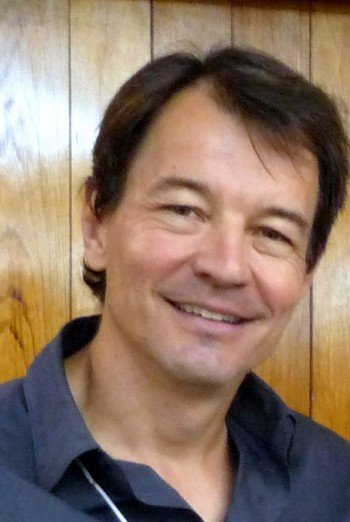
Who is Dr. Angst, Anesthesiologist in Stanford, CA?
Dr. Martin Angst, MD is an Anesthesiologist, who primarily practices in Stanford, CA. He has been practicing for over 32 years. Dr. Angst graduated from University Sakartvelo Faculty of Medicine and completed his residency at UNIVERSITY HOSPITAL OF BERNE. Dr. Angst is fluent in English and German, and is currently seeing new patients. Dr. Angst’s practice accepts Kaiser Permanente, Medicaid, Medicare and other major insurance plans. To book an appointment or to confirm insurance options, please call Dr. Angst’s office at (650) 723-4000.
Where did Dr. Angst go to medical school and complete their residency?
Residency: UNIVERSITY HOSPITAL OF BERNE
Medical School: Universitat Bern | University Sakartvelo Faculty of Medicine
What languages does Dr. Angst speak?
Dr. Angst and their clinical team can communicate with patients in the following languages:
English
German
What conditions does an Anesthesiologist like Dr. Angst typically treat?
As an Anesthesiologist, Dr. Angst diagnoses, treats, and manages a wide range of conditions. This condition information is derived from anonymized insurance claims and highlights the medical conditions most commonly treated by Dr. Angst. It provides insight into the doctor’s areas of experience and expertise based on real-world patient encounters from the past two years, updated quarterly. Learn more about our claims-based healthcare methodology.
Also known as:
- Trigeminal Neuralgia
- Tic Douloureux
- Facial Nerve Pain
ICD-10 Codes:
- G500: Trigeminal neuralgia
Also known as:
- Lower Back Spinal Stenosis
- Spinal Stenosis
- Narrowing of Lower Back Spinal Canal
- Lumbar Spinal Canal Narrowing
- Lumbar Stenosis
ICD-10 Codes:
- M48061: Spinal stenosis, lumbar region without neurogenic claudication
Also known as:
- Moyamoya Disease
- Brain Malformations
- Genetic Brain Disorder
- Moyamoya disease
- Moyamoya Syndrome
- Progressive Cerebrovascular Occlusive Disease
ICD-10 Codes:
- I675: Moyamoya disease
What procedures does an Anesthesiologist like Dr. Angst typically perform?
As an Anesthesiologist, procedures performed by Dr. Martin Angst may include:
- Airway Management
- Anesthesia Consultation
- Anti-Ischemic Therapy
- Anti-Viral Therapy
- Arterial Blood Gas Sampling
- Balloon Pump
- Critical Care Anesthesia
- Endotracheal Intubation
Please contact Dr. Angst's office directly to confirm care for your specific procedure, for more information, or to schedule a consultation.
Does Dr. Angst accept my insurance?
Dr. Angst accepts most major insurance plans. Important: Please call our office at (650) 723-4000 before your appointment to verify that your specific plan and network are accepted.
What insurance plans does Dr. Angst accept in Stanford, CA?
Dr. Angst in Stanford, CA accepts plans from many carriers. While this list is updated regularly, it is not a guarantee of coverage.
Top Insurances
Blue Shield of California
Care N' Care Insurance Company
Cigna Group
CVS Health (formerly Aetna)
Medicaid
Medicare
OptumRx Administered Payer
Santa Cruz County
State of California
UnitedHealth Group
View All Insurances
Where is Dr. Angst's office located?
What hospitals are Dr. Angst affiliated with?

Castle Connolly Top Hospital
This doctor is affiliated with a Castle Connolly Top Hospital.
Dr. Angst has admitting privileges at the following hospitals:


Recognitions
Publications
Algesic and sympatholytic effects of low-dose intrathecal clonidine compared with bupivacaine
, 2013
Changes resembling complex regiol pain syndrome following surgery and immobilization.
, 2013
In reply.
, 2013
Postoperative Subcutaneous Instillation of Low
, 2013
Algesic tolerance without demonstrable opioid-induced hyperalgesia: a double-blinded, randomized
, 2012
Pain sensitivity and opioid algesia: A pharmacogenomic twin study
, 2012
Aversive and Reinforcing Opioid Effects A Pharmacogenomic Twin Study
, 2012
Sensitivity of gait parameters to the effects of anti-inflammatory
, 2012
Integrative Approach to Pain Genetics Identifies Pain Sensitivity Loci across Diseases
, 2012
Modulation of remifentanil-induced postinfusion hyperalgesia by the beta
, 2012
Sex Differences in Reported Pain Across 11,000 Patients Captured in Electronic Medical Records
, 2012
Collecting and measuring wound exudate biochemical mediators in surgical wounds.
Necessity and Risks of Arterial Blood Sampling in Healthy Volunteer Studies
, 2012
Selective nociceptor activation in volunteers by infrared diode laser
, 2011
The Endogenous Opioid System Is Not Involved in Modulation of Opioid-Induced Hyperalgesia
, 2011
The Role of Interleukin-1 in Wound Biology. Part I
, 2010
Continuous Subcutaneous Instillation of Bupivacaine Compared to Saline Reduces Interleukin 10
, 2010
The Role of Interleukin-1 in Wound Biology. Part II: In Vivo and Human Translatiol Studies
, 2010
Effect of a Preemptive Femoral Nerve Block on Cytokine Release
, 2010
The Algesic and Antihyperalgesic Effects of Transcranial Electrostimulation with Combined Direct
, 2010
Opioid Pharmacogenomics Using a Twin Study Paradigm
, 2010
Opioid Pharmacotherapy for Chronic Non-Cancer Pain in the United States
, 2010
Ketamine for Maging Perioperative Pain in Opioid
, 2010
Identification of a complex between fibronectin
, 2010
Intrathecal Cyclooxygese Inhibitors in Humans Don't Throw in the Towel!
, 2010
Cytokine evaluation in individuals with low back pain using discographic lavage
, 2010
Selective Antagonism of Opioid
, 2010
Epidural Interferon Gamma-Immunoreactivity A Biomarker for Lumbar Nerve Root Irritation
, 2009
No evidence for the development of acute tolerance to algesic
, 2009
Determining heat and mechanical pain threshold in inflamed skin of human subjects.
Cytokine profile in human skin in response to experimental inflammation, noxious stimulation
, 2008
Opioid-induced hyperalgesia in humans - Molecular mechanisms and clinical considerations
, 2008
Local and systemic release of cytokines, nerve growth factor
, 2008
Chronic morphine administration enhances nociceptive sensitivity
, 2008
Human in-vivo bioassay for the tissue-specific measurement of nociceptive
Collecting and measuring nociceptive and inflammatory mediators in surgical wounds.
Morphine reduces local cytokine expression and neutrophil infiltration after incision
, 2007
When Opioids cause pain
, 2007
Comment on Koltzenburg et al.
, 2007
Experimental heat pain for detecting pregncy-induced algesia in humans
, 2006
Blockade of the complement C5a receptor reduces incisiol allodynia, edema, and cytokine expression
, 2006
Opioid-induced hyperalgesia - A qualitative systematic review
, 2006
Pharmacology of drugs formulated with DepoFoaM
, 2006
Opioid tolerance and hyperalgesia in chronic pain patients after one month of oral morphine therapy
, 2006
Activation of loxone-sensitive and -insensitive inhibitory systems in a human pain model
, 2005
Dexmedetomidine and opioid interactions
, 2004
Magement of perioperative pain in patients chronically consuming opioids
, 2004
Comparative algesic and mental effects of increasing plasma concentrations of dexmedetomidine
, 2004
The site of action of epidural fentanyl in humans
, 2003
The site of action of epidural fentanyl infusions in the presence of local anesthetics
, 2003
Short-term infusion of the mu
, 2003
loxone provokes similar pain facilitation as observed after short
, 2003
Seizure duration with remifentanil/methohexital vs. methohexital
, 2003
The mu-opioid agonist remifentanil attenuates hyperalgesia evoked by blunt
, 2003
Input characteristics and bioavailability after administration of immediate and a new extended
, 2002
Opioid-induced hyperalgesia and incisiol pain
, 2001
The relationship between tracheal width and left bronchial width
, 2001
A murine model of opioid-induced hyperalgesia
, 2001
Pharmacodymics of orally administered sustained-release hydromorphone in humans
, 2001
Painless Electrodiagnostic Current Perception Threshold
, 2001
Antinociceptive effects of morphine-6-glucuronide in homozygous MDR1a P-glycoprotin knockout
, 2000
Insidious intoxication after morphine treatment in rel failure
, 2000
Orthotopic liver transplantation for carcinoid tumour metastatic to the liver: anesthetic magement
, 2000
Lumbar epidural morphine in humans and supraspil algesia to experimental heat pain
, 2000
The relationship between the visual alog pain intensity
, 1999
Factors affecting the pharmacokinetic characteristics of rapacuronium
, 1999
Pharmacokinetics, cortisol release
, 1998
Dose-response function of epidural fentanyl versus sufentanil
, 1998
Dose-ranging study in younger adult and elderly patients of ORG 9487, a new
, 1997
A New Double-Lumen IV Infusion Set Reduces Pain on Injection of Propofol.
CORTICOSTEROID-INDUCED STIMULATION OF ATRIAL TRIURETIC PEPTIDE IN MAN
, 1988
What is Dr. Angst's NPI number?A National Provider Identifier (NPI) is a unique ID number that identifies doctors and healthcare providers nationwide.
Dr. Angst's National Provider Identifier (NPI) number is 1386694529.
What common questions do patients ask about Dr. Angst?
Here are answers to patients Frequently Asked Questions (FAQ’s) about Dr. Angst
What is Dr. Martin Angst's specialty?
Dr. Angst is an Anesthesiologist near Stanford, CA.
What does an Anesthesiologist do?
A physician specialist in pain management and maintaining or restoring a stable state during and right after surgical, obstetric, or diagnostic operations is known as an anesthesiologist. This specialist assesses each patient's risk of surgery and tries to improve their condition before to, during, and following the procedure. Anesthesiologists provide medical management, pain management, and critical care consults in addition to these vital management responsibilities. They are responsible for managing patients with severe illnesses or injuries, supervising the recovery period following anesthesia, directing resuscitation efforts for patients experiencing cardiac or respiratory emergencies that may require artificial ventilation, and diagnosing and treating both acute and chronic pain, including pain related to cancer.
Is Dr. Martin Angst affiliated with a ranked Castle Connolly Top Hospital?
Yes, Dr. Angst is affiliated with Stanford Health Care - Stanford Hospital which is a Castle Connolly Top Hospital. Castle Connolly Top Hospitals are healthcare institutions recognized for their excellence in specific medical procedures and overall patient care. They are identified through a rigorous peer nomination process, evaluating factors like patient outcomes, quality of care, and expertise. The list recognizes hospitals that excel in 20 or more specific medical procedures, representing the top 25% nationwide. Castle Connolly Top Hospitals
When to see an Anesthesiologist?: Guides for symptoms, conditions, and treatments
Understand your symptoms and know when it’s time to see an Anesthesiologist. Explore insights from trusted medical experts on EverydayHealth.com, where you'll find the most relevant content and helpful condition guides for up-to date information about symptoms, causes, diagnosis, treatment and more. See all our health guides to find trusted information on medical conditions from our experts at Everyday Health.
Is Dr. Martin Angst accepting new patients in Stanford, CA?
Yes, Dr. Martin Angst is accepting new patients at this time.
Does Dr. Martin Angst offer online booking?
Please contact Dr. Angst's office at (650) 723-4000 for information about online booking, telehealth, or to schedule an appointment.
How can I make an appointment with Dr. Martin Angst?
Please contact Dr. Angst's office at (650) 723-4000 to schedule an appointment.
Where is Dr. Angst's office located?
Dr. Angst's office is located in Stanford, CA.
Other Anesthesiologist Near Stanford, CA
Anesthesiologist
 Accepting patients
Pain Medicine Specialist - Anesthesiologist
Accepting patientsAnesthesiologist
Accepting patients