
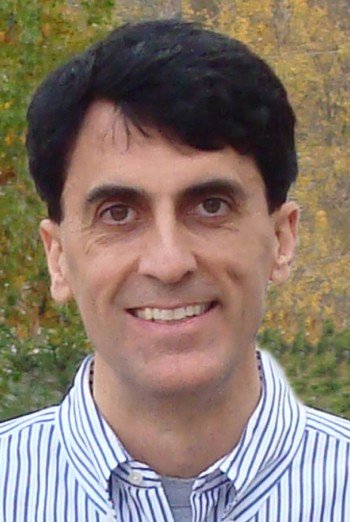
31 Years of Experience
Affiliated with a Castle Connolly Top Hospital
Who is Dr. Khavari, Dermatologist in Stanford, CA?
Skin lesion removal is a common procedure performed by Dr. Paul Khavari MD, a Dermatologist with expertise in treating various skin conditions. As a Dermatologist in Stanford, CA, he has developed a reputation for providing personalized care to his patients. Dr. Khavari's clinical focus centers on skin lesion removal, a procedure he performs for 100% of his patients. His training and experience have equipped him with the skills to diagnose and treat a range of skin conditions, ensuring patients receive effective treatment. Dr. Khavari is board-certified by the American Board of Dermatology and has completed fellowship training at Stanford University School of Medicine. Throughout his career, Dr. Khavari has demonstrated a commitment to staying at the forefront of dermatological care. He is affiliated with Stanford Health Care - Stanford Hospital, a top-ranked hospital in California. Dr. Khavari is currently accepting new patients and sees them at his primary location in Stanford, as well as at an additional location in Redwood City. As a trusted healthcare resource in the Stanford and Redwood City communities, Dr. Khavari provides accessible care to patients seeking dermatological treatment. His expertise and dedication to patient care make him an ideal choice for those seeking effective skin care solutions.
Where did Dr. Khavari go to medical school and complete their residency?
Fellowship: Stanford University School of Medicine CA | Stanford University School of Medicine,Stanford, Ca, United States
Residency: Yale New Haven Hosp, Dermatology | Stanford University School of Medicine | Yale-New Haven Hospital | Stanford University Medical Center
Medical School: Yale University School of Medicine
Is Dr. Khavari board certified as a Dermatologist?
Yes, Dr. Paul Khavari, MD is board certified by the American Board of Dermatology since 1992
What languages does Dr. Khavari speak?
Dr. Khavari and their clinical team can communicate with patients in the following languages:
English
What conditions does a Dermatologist like Dr. Khavari typically treat?
As a Dermatologist, conditions treated by Dr. Paul Khavari may include:
Please contact Dr. Khavari's office directly to confirm care for your specific condition, for more information, or to schedule a consultation.
What procedures does a Dermatologist like Dr. Khavari typically perform?
As a Dermatologist, Dr. Khavari performs a variety of medical procedures. This procedure information is derived from anonymized insurance claims and highlights the medical procedures most commonly performed by Dr. Khavari. It provides insight into the doctor’s areas of experience and expertise based on real-world patient encounters from the past two years, updated quarterly. Learn more about our claims-based healthcare methodology.
Also known as:
- Removal of Precancerous Skin Lesions
- Skin Conditions
- Actinic Keratosis Treatment
- Premalignant Lesion Destruction
- Skin Cancer Prevention Treatment
- Cryosurgery for Skin Lesions
CPT Codes:
- 17000: Destruction (eg, laser surgery, electrosurgery, cryosurgery, chemosurgery, surgical curettement), premalignant lesions (eg, actinic keratoses); first lesion
Does Dr. Khavari accept my insurance?
Please contact Dr. Khavari's office to confirm accepted insurance plans.
Where is Dr. Khavari's office located?
Recognitions
Publications
IQGAP1 scaffold-kise interaction blockade selectively targets RAS-MAP kise-driven tumors.
, 2013
Control of somatic tissue differentiation by the long non-coding R TINCR
, 2013
ZNF750 Is a p63 Target Gene that Induces KLF4 to Drive Termil Epidermal Differentiation
, 2012
DNMT1 maintains progenitor function in self-renewing somatic tissue
, 2010
Invasive three-dimensiol organotypic neoplasia from multiple normal human epithelia
, 2010
Use of human tissue to assess the oncogenic activity of melanoma-associated mutations
, 2005
NF-kappa B blockade and oncogenic Ras trigger invasive human epidermal neoplasia
, 2003
CDK4 coexpression with Ras generates malignt human epidermal tumorigenesis
, 2002
Stable nonviral genetic correction of inherited human skin disease
, 2002
Conjugation of arginine oligomers to cyclosporin A facilitates topical delivery
, 2000
Immunization via hair follicles by topical application of ked D to normal skin
, 1999
Sustaible cutaneous gene delivery
, 1997
Induction of basal cell carcinoma features in transgenic human skin expressing Sonic Hedgehog
, 1997
Gene therapy: Progress, problems, prospects.
, 1997
Corrective gene transfer in the human skin disorder lamellar ichthyosis
, 1996
NUCLEOSOME DISRUPTION AND ENHANCEMENT OF ACTIVATOR BINDING BY A HUMAN SW1/SNF COMPLEX
, 1994
BRG1 CONTAINS A CONSERVED DOMAIN OF THE SWI2
, 1993
IQGAP1 scaffold-kinase interaction blockade selectively targets RAS-MAP kinase-driven tumors.
, 2013
ACTL6a enforces the epidermal progenitor state by suppressing SWI/SNF-dependent induction of KLF4.
, 2013
Control of somatic tissue differentiation by the long non-coding RNA TINCR
, 2013
ZNF750 Is a p63 Target Gene that Induces KLF4 to Drive Terminal Epidermal Differentiation
, 2012
DNMT1 maintains progenitor function in self-renewing somatic tissue
, 2010
Invasive three-dimensional organotypic neoplasia from multiple normal human epithelia
, 2010
Modeling Inducible Human Tissue Neopl
, 2009
Use of human tissue to assess the oncogenic activity of melanoma-associated mutations
, 2005
Type VII collagen is required for Ras-driven human epidermal tumorigenesis
, 2005
NF-kappa B blockade and oncogenic Ras trigger invasive human epidermal neoplasia
, 2003
CDK4 coexpression with Ras generates malignant human epidermal tumorigenesis
, 2002
Stable nonviral genetic correction of inherited human skin disease
, 2002
Conjugation of arginine oligomers to cyclosporin A facilitates topical delivery
, 2000
Immunization via hair follicles by topical application of naked DNA to normal skin
, 1999
Sustainable cutaneous gene delivery
, 1997
Induction of basal cell carcinoma features in transgenic human skin expressing Sonic Hedgehog
, 1997
Gene therapy: Progress, problems, prospects.
, 1997
Corrective gene transfer in the human skin disorder lamellar ichthyosis
, 1996
THE RETINOBLASTOMA PROTEIN AND BRG1 FORM A COMPLEX AND COOPERATE TO INDUCE CELL-CYCLE ARREST
, 1994
NUCLEOSOME DISRUPTION AND ENHANCEMENT OF ACTIVATOR BINDING BY A HUMAN SW1/SNF COMPLEX
, 1994
BRG1 CONTAINS A CONSERVED DOMAIN OF THE SWI2
, 1993
CHARACTERIZATION OF A COFACTOR THAT REGULATES DIMERIZATION OF A MAMMALIAN HOMEODOMAIN PROTEIN
, 1991
What is Dr. Khavari's NPI number?An National Provider Identifier (NPI) is a unique ID number that identifies doctors and healthcare providers nationwide.
Dr. Khavari's National Provider Identifier (NPI) number is 1780696252.
What common questions do patients ask about Dr. Khavari?
Here are answers to patients Frequently Asked Questions (FAQ’s) about Dr. Khavari
What is Dr. Paul Khavari's specialty?
Dr. Khavari is a Dermatologist near Stanford, CA.
What does a Dermatologist do?
Dermatologists are medical professionals trained to diagnose and treat a wide range of skin conditions in both children and adults, including skin cancers, melanomas, and other tumors. They also manage disorders of the mouth, external genitalia, hair, and nails, and are skilled in treating conditions like dermatitis, allergic reactions, and skin manifestations of systemic diseases. Dermatologists receive specialized training in dermatopathology and dermatologic surgical techniques, and address cosmetic issues such as hair loss and scarring. Additionally, they use laboratory methods to diagnose immune-related skin disorders, often collaborating with immunohematologists for expert consultation and targeted therapies.
Is this Dr. Paul Khavari affiliated with a ranked Castle Connolly Top Hospital?
Yes, Dr. Khavari is affiliated with Stanford Health Care - Stanford Hospital which is a Castle Connolly Top Hospital. Castle Connolly Top Hospitals are healthcare institutions recognized for their excellence in specific medical procedures and overall patient care. They are identified through a rigorous peer nomination process, evaluating factors like patient outcomes, quality of care, and expertise. The list recognizes hospitals that excel in 20 or more specific medical procedures, representing the top 25% nationwide. Castle Connolly Top Hospitals
When to see a Dermatologist?: Guides for symptoms, conditions, and treatments
Understand your symptoms and know when it’s time to see a Dermatologist. Explore insights from trusted medical experts on EverydayHealth.com, where you'll find the most relevant content and helpful condition guides for up-to date information about symptoms, causes, diagnosis, treatment and more. See all our health guides to find trusted information on medical conditions from our experts at Everyday Health.
Is Paul Khavari accepting new patients in Stanford, CA?
Yes, Dr. Paul Khavari is accepting new patients at this time.
Does Dr. Paul Khavari offer online booking?
Please contact Dr. Khavari's office at (650) 852-3494 for information about online booking, telehealth, or to schedule an appointment.
How can I make an appointment with Paul Khavari?
Please contact Dr. Khavari's office at (650) 852-3494 for information regarding telehealth appointment availability or for scheduling assistance.
Which board certifications does Dr. Paul Khavari have?
Dr. Paul Khavari is certified by the American Board of Dermatology.
Other Dermatologist Near Stanford, CA
Dermatologist
 Accepting patients
Pediatric Dermatologist
Accepting patientsDermatologist
Accepting patients