
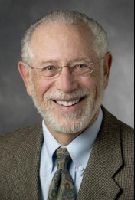
Affiliated with a Castle Connolly Top Hospital
Who is Dr. Marmor, Ophthalmologist in Stanford, CA?
Dr. Michael Marmor, MD is an Ophthalmologist, who primarily practices in Stanford, CA with 1 additional practice location. He is board certified. Dr. Marmor graduated from Harvard Medical School, Boston, Massachusetts and completed his residency at Mass Eye And Ear Infirmary, Ophthalmology; Ucla Med Ctr, Internal Medicine. He is a member of the American Academy of Ophthalmology. Dr. Marmor is fluent in English, and is currently seeing new patients. To book an appointment or to confirm insurance options, please call Dr. Marmor’s office at (650) 498-5710.
What are Areas of Expertise for Dr. Marmor?
Dr. Michael Marmor, MD is a highly-rated, board-certified Ophthalmologist known for expertly diagnosing, treating, and managing a wide array of related conditions and procedures. Utilizing the latest medical advancements and evidence-based practices, Dr. Marmor empowers patients to confidently navigate their health journey, specializing in Electroretinograms (ERG), Macular Degeneration, Retinal Disorders, Retinal Drug Toxicity, Retinal Dystrophies, and comprehensive wellness support. Serving the Stanford, CA community, Dr. Marmor is dedicated to enhancing lives through expert, patient-centered care.
Where did Dr. Marmor go to medical school and complete their residency?
Fellowship: National Institutes of Health (NIH), Physiology
Residency: Mass Eye And Ear Infirmary, Ophthalmology; Ucla Med Ctr, Internal Medicine | Massachusetts Eye and Ear Infirmary | Massachusetts Eye and Ear Infirmary/Harvard Medical School Program
Medical School: Harvard Medical School, Boston, Massachusetts | Harvard Medical School, Boston, Massachusetts
Is Dr. Marmor board certified as an Ophthalmologist?
Yes, Dr. Michael Marmor, MD is board certified by the American Board of Ophthalmology , American Board of Ophthalmology since 1974
What languages does Dr. Marmor speak?
Dr. Marmor and their clinical team can communicate with patients in the following languages:
English
What conditions does an Ophthalmologist like Dr. Marmor typically treat?
As an Ophthalmologist, conditions treated by Dr. Michael Marmor may include:
Please contact Dr. Marmor's office directly to confirm care for your specific condition, for more information, or to schedule a consultation.
What procedures does an Ophthalmologist like Dr. Marmor typically perform?
As an Ophthalmologist, procedures performed by Dr. Michael Marmor may include:
- Cataract Removal
- Corneal Specialist Consultation
- Corneal Specialist Follow Up
- Dark Adaptometry
- Diabetes Care - Eye Exam
- Electro-oculography (EOG)
- Electroretinography (ERG)
- Eye Emergency Visit
Please contact Dr. Marmor's office directly to confirm care for your specific procedure, for more information, or to schedule a consultation.
Does Dr. Marmor accept my insurance?
Please contact Dr. Marmor's office to confirm accepted insurance plans.
Where is Dr. Marmor's office located?
Recognitions
Memberships & Associations
American Academy of Ophthalmology
Fellow
Awards
Green Lecturer, Macula Society
West Virginia University
Susruta Lecturer
American Academy of Ophthalmology
Senior Honor Award
Wayne State University
Bonner Book Award
Award of Merit in Retina Research, Retina Research Foundation
American Academy of Ophthalmology
Lifetime Achievement Honor Award
Alcon Research Institute
Research Award
Xian Medical University
Honorary Professor
Publications
Value of red targets
, 2013
Modulation of Transgene Expression in Retil Gene Therapy by Selective Laser Treatment
, 2013
Efficient and Effective Screening for Hydroxychloroquine Toxicity
, 2013
FOVEAL CAVITATION AS AN OPTICAL COHERENCE TOMOGRAPHY FINDING IN CENTRAL CONE DYSFUNCTION
, 2012
Comparison of Screening Procedures in Hydroxychloroquine Toxicity
, 2012
Longterm cultures of the aged human RPE do not maintain epithelial morphology
, 2012
Fifty Years of Ophthalmic Laser Therapy
, 2011
Fluorescein Angiography Insight and Serendipity a Half Century Ago
, 2011
Revised Recommendations on Screening for Chloroquine and Hydroxychloroquine Retinopathy
, 2011
Simulating vision with and without macular disease.
, 2010
ERG evaluation of daily, high-dose sildefil usage
, 2009
ISCEV Standard for full-field clinical electroretinography (2008 update)
, 2009
Effect of shape and coating of a subretil prosthesis on its integration with the reti
, 2009
Healing of Retil Photocoagulation Lesions
, 2008
Total rod ERG suppression with high dose compassiote Fenretinide usage
, 2008
Visual insignificance of the foveal pit - Reassessment of foveal hypoplasia as fovea pla
, 2008
Intrasession variability of the full-field ERG
, 2007
The dilemma of the late-onset Dystrophy
, 2007
Ophthalmology and art: Simulation of Monet's cataracts and Degas' retil disease
, 2006
The dilemma of hydroxychloroquine screening: New information from the multifocal ERG
, 2005
Alcohol- and light-induced electro-oculographic responses: variability and clinical utility
, 2005
Differential gene expression in atomical compartments of the human eye
, 2005
Migration of retil cells through a perforated membrane
, 2004
Are circadian variations in the electroretinogram evident on routine testing?
, 2004
Standard for clinical electroretinography (2004 update)
, 2004
Localized neurotransmitter release for use in a prototype retil interface
, 2003
Escher and the ophthalmologist
, 2003
Guidelines for basic multifocal electroretinography (mfERG)
, 2003
Pulsed Electron Avalanche Knife (PEAK) for intraocular surgery
, 2001
Double fault! Ocular hazards of a tennis sunglass
, 2001
The dilemma of color deficiency and art
, 2001
Multifocal electroretinogram abnormalities persist following resolution of central serous
, 2000
A brief history of macular grids: From Thomas Reid to Edvard Munch and Marc Amsler
, 2000
Sildefil (Viagra) and ophthalmology
, 1999
The training of George K. Kambara, MD
, 1999
Topography of cone electrophysiology in the enhanced S cone syndrome
, 1999
Mechanisms of fluid accumulation in retil edema
, 1999
Retil Pigment Epithelium: Function and Disease.
On the cause of serous detachments and acute central serous chorioretinopathy
, 1997
The Eye of the Artist
Pattern dystrophy of the retil pigment epithelium and geographic atrophy of the macula
, 1996
The source of fluid and protein in serous retil detachments
, 1996
THE ERG IS ALIVE AND WELL
, 1995
THE METABOLIC DEPENDENCY OF RETIL ADHESION IN RABBIT AND PRIMATE
, 1995
CONDITIONS NECESSARY FOR THE FORMATION SEROUS DETACHMENT - EXPERIMENTAL-EVIDENCE FROM THE CAT
, 1994
RETIL ADHESIVENESS IN THE MONKEY
, 1994
OXYGEN DEPENDENCY OF RETIL ADHESION
, 1993
STANDARD FOR CLINICAL ELECTROOCULOGRAPHY
, 1993
MANNITOL, DEXTROMETHORPHAN
, 1993
RETIL ADHESIVE FORCE IN LIVING RABBIT, CAT
, 1992
LOWERING THE CALCIUM-CONCENTRATION IN THE SUBRETIL SPACE INVIVO LOOSENS RETIL ADHESION
, 1992
Functiol visual loss in Cambodian refugees: a study of cultural factors in ophthalmology.
, 1991
IS THIORIDAZINE RETINOPATHY PROGRESSIVE - RELATIONSHIP OF PIGMENTARY CHANGES TO VISUAL FUNCTION
, 1990
RETIL ADHESIVENESS IS WEAKENED BY ENZYMATIC MODIFICATION OF THE INTERPHOTORECEPTOR MATRIX INVIVO
, 1990
DIAGNOSTIC CLINICAL FINDINGS OF A NEW SYNDROME WITH NIGHT BLINDNESS, MACULOPATHY
, 1990
LONG-TERM FOLLOW-UP OF THE PHYSIOLOGIC ABNORMALITIES AND FUNDUS CHANGES IN FUNDUS-ALBIPUNCTATUS
, 1990
CONTROL OF SUBRETIL FLUID - EXPERIMENTAL AND CLINICAL-STUDIES
, 1990
DEXTROMETHORPHAN PROTECTS RETI AGAINST ISCHEMIC-INJURY INVIVO
, 1989
PHOTOAVERSION IN RETINITIS PIGMENTOSA
, 1989
NEW HYPOTHESES ON THE PATHOGENESIS AND TREATMENT OF SEROUS RETIL-DETACHMENT
, 1988
The membrane of giant molluscan neurons
, 1975
What is Dr. Marmor's NPI number?An National Provider Identifier (NPI) is a unique ID number that identifies doctors and healthcare providers nationwide.
Dr. Marmor's National Provider Identifier (NPI) number is 1225181662.
What common questions do patients ask about Dr. Marmor?
Here are answers to patients Frequently Asked Questions (FAQ’s) about Dr. Marmor
What is Dr. Michael Marmor's specialty?
Dr. Marmor is a Ophthalmologist near Stanford, CA.
What does an Ophthalmologist do?
An ophthalmologist possesses the knowledge and professional skills required to deliver comprehensive eye and vision care. These medical doctors are trained to diagnose, monitor, and treat all ocular and visual disorders, whether through medical or surgical interventions. Their expertise encompasses a wide range of issues affecting the eye and its structures, including the eyelids, orbit, and visual pathways. Additionally, ophthalmologists prescribe vision services, such as glasses and contact lenses, to help patients achieve optimal visual health.
Is this Dr. Michael Marmor affiliated with a ranked Castle Connolly Top Hospital?
Yes, Dr. Marmor is affiliated with Stanford Health Care - Stanford Hospital which is a Castle Connolly Top Hospital. Castle Connolly Top Hospitals are healthcare institutions recognized for their excellence in specific medical procedures and overall patient care. They are identified through a rigorous peer nomination process, evaluating factors like patient outcomes, quality of care, and expertise. The list recognizes hospitals that excel in 20 or more specific medical procedures, representing the top 25% nationwide. Castle Connolly Top Hospitals
When to see an Ophthalmologist?: Guides for symptoms, conditions, and treatments
Understand your symptoms and know when it’s time to see an Ophthalmologist. Explore insights from trusted medical experts on EverydayHealth.com, where you'll find the most relevant content and helpful condition guides for up-to date information about symptoms, causes, diagnosis, treatment and more. See all our health guides to find trusted information on medical conditions from our experts at Everyday Health.
Is Michael Marmor accepting new patients in Stanford, CA?
Yes, Dr. Michael Marmor is accepting new patients at this time.
Does Dr. Michael Marmor offer online booking?
Please contact Dr. Marmor's office at (650) 498-5710 for information about online booking, telehealth, or to schedule an appointment.
How can I make an appointment with Michael Marmor?
Please contact Dr. Marmor's office at (650) 498-5710 for information regarding telehealth appointment availability or for scheduling assistance.
Which board certifications does Dr. Michael Marmor have?
Dr. Michael Marmor is certified by the American Board of Ophthalmology.
Other Ophthalmologist Near Stanford, CA
Ophthalmologist
 Accepting patients
Ophthalmologist
Accepting patientsOphthalmologist
Accepting patients