
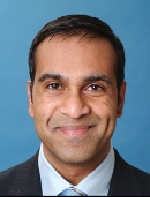
Affiliated with a Castle Connolly Top Hospital
Who is Dr. Shrivastava, Neurosurgeon in Yonkers, NY?
Dr. Raj Shrivastava, MD is a Neurosurgeon, who primarily practices in Yonkers, NY with 2 additional practice locations. He is board certified. Dr. Shrivastava completed his residency at Mt Sinai Sch Of Med, General Surgery. Dr. Shrivastava is fluent in English, Chinese, and Spanish, and is currently seeing new patients. Dr. Shrivastava’s practice accepts Medicare, Aetna, Cigna, UnitedHealthcare and other major insurance plans. To book an appointment or to confirm insurance options, please call Dr. Shrivastava’s office at (212) 241-6147.
Where did Dr. Shrivastava go to medical school and complete their residency?
Fellowship: Skull Base Surgery, St. Luke's-Roosevelt Hospital Center | Cranial base clinical fellowship, St. Luke's Roosevelt Hospital Center, New York, NY, 2004
Residency: Mt Sinai Sch Of Med, General Surgery | The Mount Sinai Medical Center, New York
Medical School: University of Pa Sch of Med, Philadelphia Pa
Is Dr. Shrivastava board certified as a Neurosurgeon?
Yes, Dr. Raj Shrivastava, MD is board certified by the American Board of Neurological Surgery
What languages does Dr. Shrivastava speak?
Dr. Shrivastava and their clinical team can communicate with patients in the following languages:
Chinese
English
Spanish
What conditions does a Neurosurgeon like Dr. Shrivastava typically treat?
As a Neurosurgeon, Dr. Shrivastava diagnoses, treats, and manages a wide range of conditions. This condition information is derived from anonymized insurance claims and highlights the medical conditions most commonly treated by Dr. Shrivastava. It provides insight into the doctor’s areas of experience and expertise based on real-world patient encounters from the past two years, updated quarterly. Learn more about our claims-based healthcare methodology.
Also known as:
- Benign Cranial Nerve Tumor
- Benign Pituitary Tumor
- Benign Tumor
- Peripheral Nerve Disorder
- Pituitary Disorder
- Pituitary Tumor Treatment (PDQ)
- Prolactinoma
- Non-cancerous cranial nerve growth
- Benign cranial nerve neoplasm
- Non-cancerous growth in pituitary gland
- Pituitary adenoma
ICD-10 Codes:
- D333: Benign neoplasm of cranial nerves
- D352: Benign neoplasm of pituitary gland
Also known as:
- Benign Meningioma
- Benign Tumor
- Non-cancerous brain or spinal lining tumor
- Meningeal tumor
- Brain membrane tumor
ICD-10 Codes:
- D329: Benign neoplasm of meninges, unspecified
Also known as:
- Endocrine or Nervous System Tumor of Unspecified Behavior
- Endocrine Gland Neoplasm
- Nervous System Neoplasm
- Unspecified Gland Tumor
ICD-10 Codes:
- D497: Neoplasm of unspecified behavior of endocrine glands and other parts of nervous system
What procedures does a Neurosurgeon like Dr. Shrivastava typically perform?
As a Neurosurgeon, Dr. Shrivastava performs a variety of medical procedures. This procedure information is derived from anonymized insurance claims and highlights the medical procedures most commonly performed by Dr. Shrivastava. It provides insight into the doctor’s areas of experience and expertise based on real-world patient encounters from the past two years, updated quarterly. Learn more about our claims-based healthcare methodology.
Also known as:
- Computer-Assisted Brain Surgery (Stereotactic)
- Stereotactic Neurosurgery
- Image-Guided Brain Surgery
- Cranial Navigational Procedure
CPT Codes:
- 61781: Stereotactic computer-assisted (navigational) procedure; cranial, intradural (List separately in addition to code for primary procedure)
Also known as:
- Removal of Brain Lesion from Skull Base
- Cranial Fossa Lesion Excision
- Brain Tumor Removal
- Vascular Lesion Resection
- Dural Repair
CPT Codes:
- 61601: Resection or excision of neoplastic, vascular or infectious lesion of base of anterior cranial fossa; intradural, including dural repair, with or without graft
Also known as:
- Skull Base Tumor Removal
- Posterior Cranial Fossa Lesion Excision
- Jugular Foramen Tumor Resection
- Foramen Magnum Lesion Removal
- Cervical Vertebrae Lesion Excision
CPT Codes:
- 61616: Resection or excision of neoplastic, vascular or infectious lesion of base of posterior cranial fossa, jugular foramen, foramen magnum, or C1-C3 vertebral bodies; intradural, including dural repair, with or without graft
Also known as:
- Skull Defect Repair
- Cranioplasty
- Skull Reconstruction
- Head Bone Repair
CPT Codes:
- 62141: Cranioplasty for skull defect; larger than 5 cm diameter
Also known as:
- Head and Neck Lesion Removal
- Skull Base Tumor Removal
- Infratemporal Fossa Surgery
- Parapharyngeal Space Excision
- Petrous Apex Lesion Removal
CPT Codes:
- 61606: Resection or excision of neoplastic, vascular or infectious lesion of infratemporal fossa, parapharyngeal space, petrous apex; intradural, including dural repair, with or without graft
Also known as:
- Autologous Soft Tissue Graft
- Fat Grafting
- Dermal Graft
- Fascia Graft
- Tissue Transfer
CPT Codes:
- 15769: Grafting of autologous soft tissue, other, harvested by direct excision (eg, fat, dermis, fascia)
Also known as:
- Sinus Endoscopy with Optic Nerve Decompression
- Endoscopy
- Minimally Invasive Sinus Surgery
- Optic Nerve Release Surgery
- Endoscopic Sinus Surgery
CPT Codes:
- 31294: Nasal/sinus endoscopy, surgical, with optic nerve decompression
Does Dr. Shrivastava accept my insurance?
Dr. Shrivastava accepts most major insurance plans. Important: Please call our office at (212) 241-6147 before your appointment to verify that your specific plan and network are accepted.
What insurance plans does Dr. Shrivastava accept in Yonkers, NY?
Dr. Shrivastava in Yonkers, NY accepts plans from many carriers. While this list is updated regularly, it is not a guarantee of coverage.
Top Insurances
Centene Corporation
Cigna Group
CVS Health (formerly Aetna)
Elevance Health Inc. (formerly Anthem)
EmblemHealth
Healthfirst New York
Medicare
New York City Health and Hospitals Corporation
State of New York
UnitedHealth Group
View All Insurances
Where is Dr. Shrivastava's office located?
Recognitions
Castle Connolly Doctor’s Choice Awards

Doctor’s Choice - All Time
Among the most nominated for the Castle Connolly Top Doctor recognition across all time
Awards
Patient's Choice - Vital Health Care Group
Compassionate Physician Award - National Award
Consumer Research Council of America
America's Top Surgeon Award
Patient's Choice - Vital Health Care Group
Patient's Choice Award - National Award
First Presentation
American Association of Neurosurgeons (AANS) Vesalius Award
Castle Connolly Top Doctors, Castle Connolly2011
US News and World Report Selected Top Doctor-Neurosurgery
What is Dr. Shrivastava's NPI number?An National Provider Identifier (NPI) is a unique ID number that identifies doctors and healthcare providers nationwide.
Dr. Shrivastava's National Provider Identifier (NPI) number is 1184609240.
What common questions do patients ask about Dr. Shrivastava?
Here are answers to patients Frequently Asked Questions (FAQ’s) about Dr. Shrivastava
What is Dr. Raj Shrivastava's specialty?
Dr. Shrivastava is a Neurosurgeon near Yonkers, NY.
What does a Neurosurgeon do?
A neurological surgeon is responsible to provide the operative and non-operative management which includes prevention, diagnosis, evaluation, treatment, critical care, & rehabilitation of various disorders related to the central, peripheral, and autonomic nervous systems. This includes their supporting structures and vascular supply, the complete evaluation and treatment of pathological process which is known to modify function or activity of the nervous system, the operative & non-operative management of pain. A neurological surgeon has specialization in treating patients with disorders of the nervous system which includes conditions affecting the brain, meninges, skull, and their blood supply, such as the extracranial carotid and vertebral arteries. They also manage disorders related to the pituitary gland, spinal cord, meninges, and vertebral column, including those that may require spinal fusion or instrumentation. In addition to this, they treat conditions affecting the cranial and spinal nerves throughout their course in the body.
Is this Dr. Raj Shrivastava affiliated with a ranked Castle Connolly Top Hospital?
Yes, Dr. Shrivastava is affiliated with The Mount Sinai Hospital which is a Castle Connolly Top Hospital. Castle Connolly Top Hospitals are healthcare institutions recognized for their excellence in specific medical procedures and overall patient care. They are identified through a rigorous peer nomination process, evaluating factors like patient outcomes, quality of care, and expertise. The list recognizes hospitals that excel in 20 or more specific medical procedures, representing the top 25% nationwide. Castle Connolly Top Hospitals
When to see a Neurosurgeon?: Guides for symptoms, conditions, and treatments
Understand your symptoms and know when it’s time to see a Neurosurgeon. Explore insights from trusted medical experts on EverydayHealth.com, where you'll find the most relevant content and helpful condition guides for up-to date information about symptoms, causes, diagnosis, treatment and more. See all our health guides to find trusted information on medical conditions from our experts at Everyday Health.
Is Raj Shrivastava accepting new patients in Yonkers, NY?
Yes, Dr. Raj Shrivastava is accepting new patients at this time.
Does Dr. Raj Shrivastava offer online booking?
Please contact Dr. Shrivastava's office at (212) 241-6147 for information about online booking, telehealth, or to schedule an appointment.
How can I make an appointment with Raj Shrivastava?
Please contact Dr. Shrivastava's office at (212) 241-6147 for information regarding telehealth appointment availability or for scheduling assistance.
Which board certifications does Dr. Raj Shrivastava have?
Dr. Raj Shrivastava is certified by the American Board of Neurological Surgery.
Other Neurosurgeon Near Yonkers, NY
Neurosurgeon
 Accepting patients
Neurosurgeon
Accepting patientsNeurosurgeon
Accepting patients